





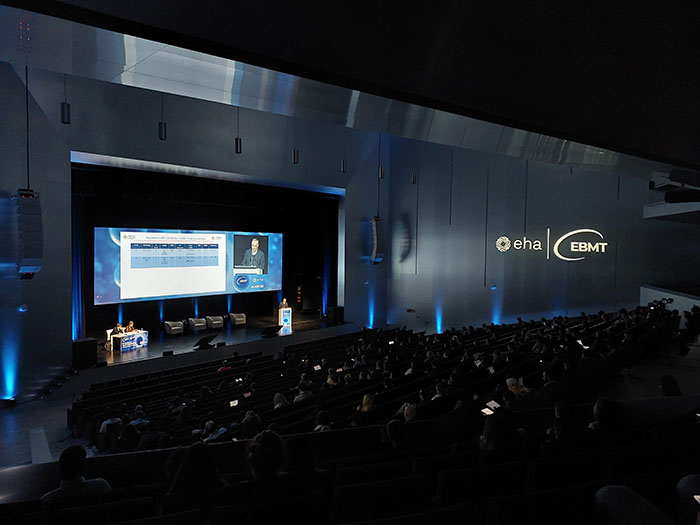
At the 8th European CAR-T Cell Meeting (EBMT-EHA) held in Palma de Mallorca in February 2026, researchers and clinicians discussed the latest advances in CAR-T therapy for lymphoma in Europe. Over the past decade, CD19-directed CAR-T therapy has significantly changed the treatment landscape for patients with relapsed or refractory B-cell lymphomas.
A transformative therapy for lymphoma
Experts highlighted that CAR-T therapy has transformed the treatment of lymphoma by enabling a patient’s own immune cells to recognize and destroy cancer cells. By genetically modifying T-cells to target CD19, a protein expressed on malignant B-cells, the therapy allows the immune system to directly attack the tumor.
Clinical experience has shown:
- High initial response rates
- Durable responses in some patients
- Acceptable safety profiles when performed in specialized centers
These results have made CAR-T therapy one of the most important innovations in modern lymphoma treatment.
CAR-T therapy as a potential curative approach
Clinical data presented at the meeting showed encouraging results for patients with large B-cell lymphoma (LBCL) who relapse after standard treatments. Results from the TRANSCEND long-term outcome study demonstrated:
- Overall response rate: 73%
- Complete remission: 53%
- Partial remission: 20%
Follow-up data showed meaningful durability of response:
- Median duration of response: 23.1 months
- Median progression-free survival: 6.8 months
- Median overall survival: 27.3 months
These results suggest that CAR-T therapy may offer a potential curative option for some lymphoma patients after second-line chemotherapy.
CAR-T therapy vs. bispecific antibodies
Another important topic at the conference was the comparison between CAR-T therapy and bispecific antibodies, a newer class of immunotherapy. CAR-T therapy typically involves a one-time treatment, but requires complex logistics and manufacturing of the patient’s cells. Bispecific antibodies, by contrast, are immediately available and administered repeatedly, and are generally easier to deliver.
Because of these differences, CAR-T therapy may be more suitable for younger and fitter patients, while bispecific antibodies may be preferred for older or more fragile patients or those with rapidly progressing disease.
Rapid progress in targeted therapies
The meeting also highlighted how treatments for chronic lymphocytic leukemia (CLL) and other B-cell malignancies have evolved dramatically over the past decades.
Earlier treatments relied mainly on chemotherapy, but modern therapy now includes targeted drugs such as:
- BTK inhibitors (ibrutinib, acalabrutinib, zanubrutinib, pirtobrutinib)
- BCL-2 inhibitors such as venetoclax
- monoclonal antibodies including rituximab and obinutuzumab
CAR-T therapy represents the next generation of personalized cancer immunotherapy, offering new hope for patients with difficult-to-treat lymphomas.
The future of CAR-T therapy in Europe
Researchers expect CAR-T therapy to play an increasingly important role in lymphoma treatment in Europe. Ongoing research is focused on improving safety, expanding indications, and introducing CAR-T therapy earlier in treatment lines.
As new clinical data continue to emerge, CAR-T therapy is expected to remain one of the most significant breakthroughs in modern cancer therapy.
Publication date: March 2026