




The newest treatments for rheumatoid arthritis include biologic medicines, JAK inhibitors and, for selected patients with severe treatment-resistant disease, CAR-T cell therapy.
For most people, treatment still begins with established disease-modifying antirheumatic drugs, known as DMARDs. CAR-T is a newer and fundamentally different approach that is being studied for selected patients whose rheumatoid arthritis remains active despite multiple advanced treatments. It is not yet a routine replacement for methotrexate, biologic treatment or JAK inhibitors.
What are the latest standard treatments for rheumatoid arthritis?
Rheumatoid arthritis treatment aims to control inflammation, achieve remission or low disease activity, and prevent permanent joint damage. Methotrexate and other conventional DMARDs are generally used first. If they are not effective, treatment may include biologic medicines or targeted therapies such as JAK inhibitors.
Biologic medicines target particular parts of the immune response. They include TNF inhibitors, IL-6 pathway inhibitors, B-cell-directed treatments and T-cell costimulation modulators. JAK inhibitors are targeted medicines taken by mouth and can be effective for some patients, although their potential risks must be assessed individually.
When rheumatoid arthritis remains active despite appropriate use of several conventional, biologic or targeted treatments, it may be described as difficult-to-treat or refractory rheumatoid arthritis. For these patients, CAR-T may provide an emerging treatment option.
How does CAR-T therapy treat rheumatoid arthritis?
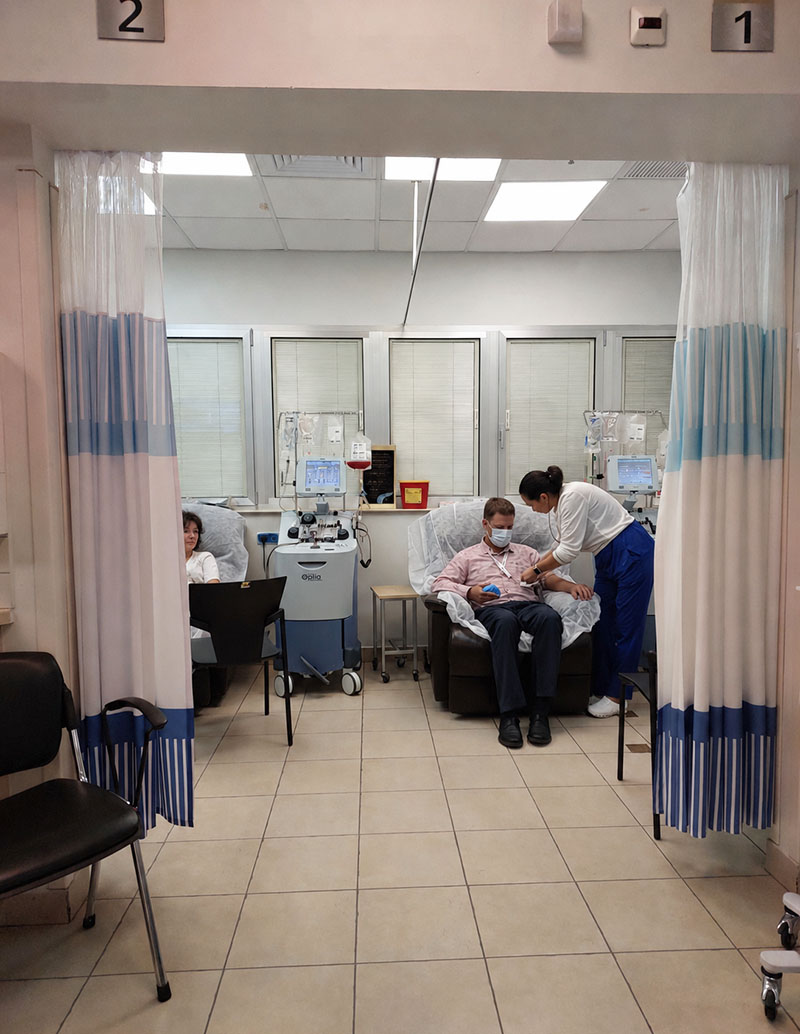
B cells contribute to rheumatoid arthritis by producing autoantibodies, presenting antigens and supporting ongoing inflammation. CD19-directed CAR-T therapy uses the patient’s own genetically modified T cells to locate and eliminate B cells throughout the body.
This deeper B-cell depletion is designed to create an immune reset, allowing a healthier B-cell population to return. Unlike medicines that must be taken continuously, CAR-T is administered as a single infusion and may offer the possibility of a longer remission.
However, CAR-T should not be described as a guaranteed cure. It may not reverse joint damage that has already occurred, and disease can return after an initial remission. Treatment suitability must always be assessed individually.
What did recent CAR-T studies in rheumatoid arthritis find?
The most important recent evidence comes from a prospective phase-1 study of six patients with severe, treatment-refractory rheumatoid arthritis. All participants had active, long-standing disease despite numerous previous biologic or targeted treatments.
After CAR-T treatment and 36 to 52 weeks of follow-up, all six patients showed improvement in disease activity. Three achieved DAS28-CRP remission and an ACR70 response at their latest assessment. Levels of relevant autoantibodies also declined substantially.
Cytokine release syndrome, or CRS, occurred in all six patients but was limited to grade 1 or 2. No neurological toxicity known as ICANS, and no serious adverse event, was reported. One patient developed a temporary grade-3 elevation in liver enzymes, which resolved.
These results are encouraging because they come from a prospective clinical trial rather than individual case reports. However, the study was small and did not compare CAR-T with standard treatment. It cannot yet show how long remission usually lasts or which patients are most likely to benefit.
A separate 2026 report of three women with severe, polyrefractory rheumatoid arthritis also found meaningful responses after CAR-T. Two achieved remission and one achieved low disease activity. At the latest follow-up, two remained in drug-free remission.
This smaller study also shows why CAR-T safety must not be understated. All three patients developed grade-3 CRS, and one developed grade-4 neurological toxicity. The patients recovered, but these complications demonstrate that autoimmune CAR-T is not automatically mild or risk-free.
CAR-T therapy for rheumatoid arthritis in Israel
Leading Israeli hospitals have been among the early providers of CAR-T therapy for selected patients with severe, treatment-resistant rheumatoid arthritis. The first reported experience involved a patient with long-standing active rheumatoid arthritis despite multiple previous treatments, who achieved remission after CAR-T infusion.
More recent clinical studies have strengthened the evidence that CAR-T may be a promising option for carefully selected patients. Learn more about CAR-T therapy for rheumatoid arthritis in Israel.
CAR-T for rheumatoid arthritis remains an emerging treatment. Its suitability, availability and timing must be determined individually by the treating medical team following a detailed medical evaluation.
Request an eligibility review
To request an initial assessment, the patient should provide an up-to-date medical summary, details of previous treatments and the response to each one, current laboratory results and any recent imaging or other relevant reports.
Whether CAR-T therapy is suitable for an individual patient will be determined by a senior rheumatologist following a detailed medical evaluation.
Request a free CAR-T eligibility check >>
Updated: November 2026
Sources
CD19 CAR T cell therapy for treatment-refractory seropositive rheumatoid arthritis, Nature Medicine
CAR-T as a salvage treatment in polyrefractory rheumatoid arthritis, PubMed
EULAR recommendations for the management of rheumatoid arthritis, 2025 update
Links
CAR-T therapy for rheumatoid arthritis in Israel >>
Read patient testimonials >>
What you gain by applying through us >>