



Systemic sclerosis, commonly called scleroderma, is a complex autoimmune disease that can affect the skin, blood vessels, lungs, heart, kidneys and digestive system. Because the disease affects each patient differently, there is no single treatment that works for everyone.
Recent advances in systemic sclerosis treatment include targeted immune therapies and antifibrotic medicines that can slow the progression of specific complications. For patients with severe, treatment-resistant systemic sclerosis, CAR-T cell therapy is one of the most innovative new treatment options now available through specialized clinical programs.
This article refers to systemic sclerosis rather than localized scleroderma, which primarily affects the skin and underlying tissues.
How is scleroderma treatment changing?
Traditional scleroderma treatment focuses on controlling immune activity, slowing fibrosis and treating each affected organ. The choice of treatment depends on whether the patient has skin progression, interstitial lung disease, pulmonary hypertension, vascular complications or other organ involvement.
Newer recommendations include medicines such as mycophenolate mofetil, rituximab and tocilizumab for selected patients with skin or lung disease. Nintedanib is an antifibrotic treatment used to slow the decline in lung function associated with systemic sclerosis-related interstitial lung disease.
Patients may also require specific medications for Raynaud’s phenomenon, digital ulcers, pulmonary hypertension or gastrointestinal complications. Autologous stem cell transplantation may be considered for some patients with rapidly progressive diffuse systemic sclerosis. However, it is an intensive procedure with significant risks and is not suitable for every patient.
When may CAR-T become an option?
Some patients continue to experience worsening skin fibrosis, lung involvement or other organ complications despite several immunosuppressive or targeted treatments. This is known as treatment-resistant or refractory systemic sclerosis.
CAR-T therapy may be considered when the disease remains active and continues to progress after the patient has usually failed two or three appropriate lines of treatment.
The aim is to intervene while the disease is still driven by active autoimmune processes. CAR-T may help prevent further progression.
What makes CAR-T a new approach to systemic sclerosis?
B cells contribute to systemic sclerosis by producing autoantibodies and supporting immune activity that promotes inflammation and fibrosis. In CD19-directed CAR-T therapy, the patient’s own T cells are collected and genetically modified to recognize and eliminate B cells throughout the blood and tissues. This deeper B-cell depletion is intended to create an immune reset, allowing a healthier B-cell population to return.
Most systemic sclerosis medications must be taken continuously to control the disease. CAR-T is different because it is administered as a single infusion and may offer the possibility of longer-lasting disease control.
CAR-T therapy for scleroderma in Israel
Sheba Medical Center offers CAR-T therapy for severe systemic sclerosis through a specialized clinical research program. The program combines expertise in rheumatology, autoimmune diseases and cellular therapy with established CAR-T infrastructure.
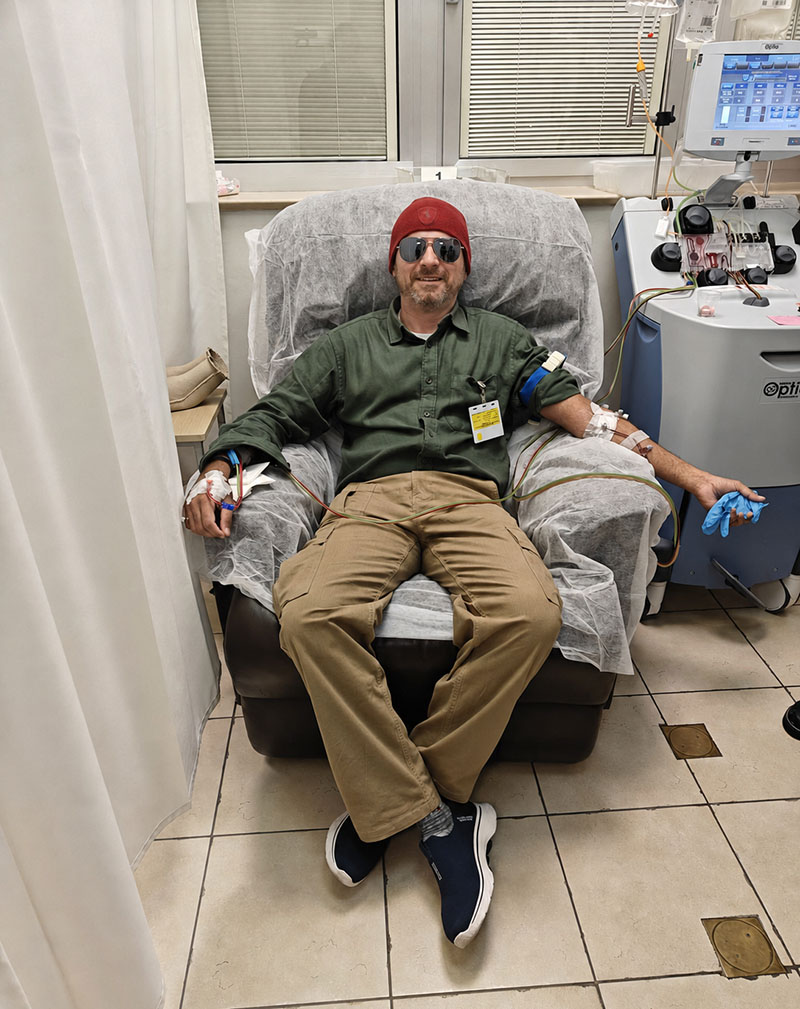
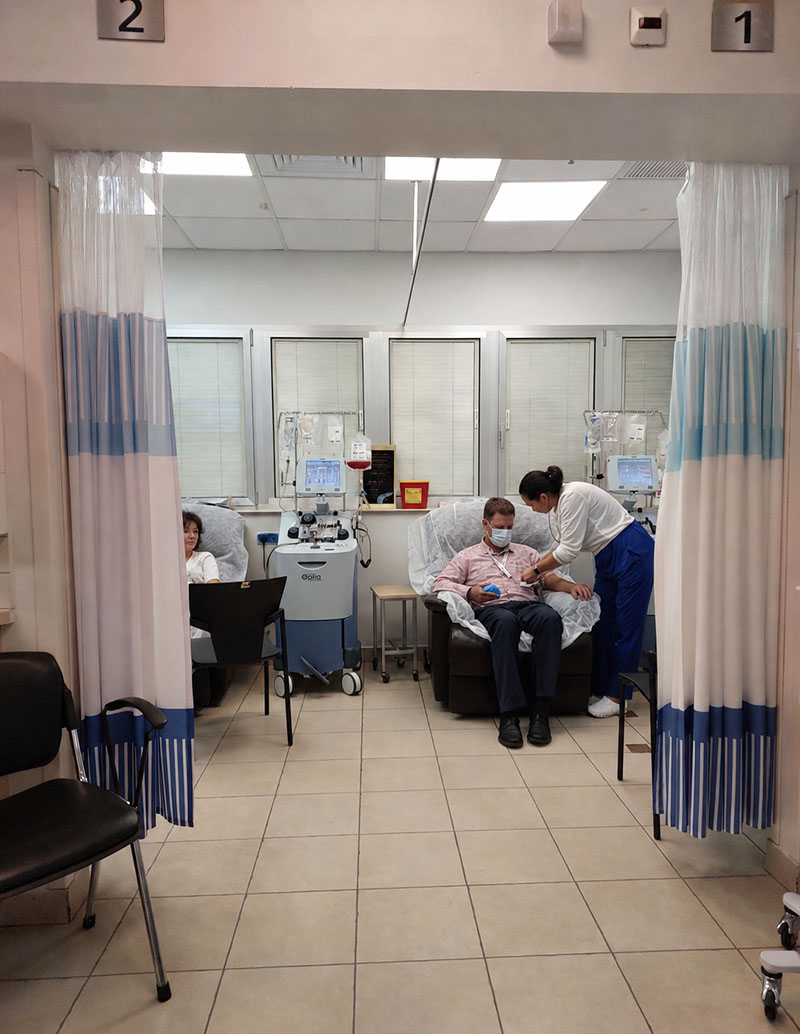
Treatment involves collecting the patient’s T cells through apheresis, modifying the cells in the laboratory and administering a short course of preparatory chemotherapy. The CAR-T cells are then returned to the patient through a single infusion, followed by close medical monitoring.
International patients receiving CAR-T treatment for scleroderma in Israel should usually plan to remain in the country for approximately 40-45 days. The exact duration depends on the treatment schedule, recovery and the medical team’s assessment.
Who can be evaluated for CAR-T therapy?
CAR-T eligibility is determined individually based on:
- Disease activity and progression
- Skin, lung, heart and other organ involvement
- Previous treatments and the response to each one
- Laboratory results, infections and the patient’s overall condition
CAR-T therapy may be considered when the disease remains active and continues to progress, usually after the patient has failed two or three appropriate lines of treatment. It is not generally appropriate when systemic sclerosis is stable or when the patient’s symptoms result mainly from irreversible damage.
Request an eligibility assessment
To request an initial assessment for CAR-T therapy for systemic sclerosis, the patient should provide an up-to-date medical summary. Whether CAR-T therapy is suitable for an individual patient will be determined by a senior rheumatologist following a detailed medical evaluation.
Publication date: August 2026
Sources
EULAR recommendations for the treatment of systemic sclerosis
CD19 CAR T-Cell Therapy in Autoimmune Disease, The New England Journal of Medicine
RESET-SSc clinical study
Links
More about CAR-T therapy for systemic sclerosis and scleroderma >>
Read patient testimonials >>
What you gain by applying through us >>