





Updated: August 2026
Patients searching for the best country for CAR-T cell therapy are rarely looking for a country in the abstract. They are trying to answer a more urgent question: where can I receive an appropriate treatment within the time, medical and financial limits of my situation?
There is no single country that is best for every patient. The right option depends on the type of blood cancer, previous treatments, current disease status, the CAR-T target being considered, waiting time, total cost and whether the program reviews international patients.
CAR-T is now an established treatment for certain forms of B-cell lymphoma, multiple myeloma and B-cell acute lymphoblastic leukemia. For international patients considering CAR-T cell therapy abroad, the most useful comparison is not simply a list of countries, but a comparison of actual treatment pathways.
Which countries offer CAR-T cell therapy?
CAR-T programs are available in the United States, several European countries, Israel, China, Canada, Australia, Singapore and a growing number of other countries.
However, “available” can mean different things:
- A commercially approved CAR-T product is routinely provided under that country’s regulatory system.
- A hospital or academic center produces its own CAR-T cells under an authorized local program.
- Treatment is available only through a clinical trial.
- Treatment exists nationally but may not be accessible to foreign patients.
- The program accepts international applications but evaluates every case individually.
Approval by the U.S. Food and Drug Administration applies to the United States. Europe, the United Kingdom and other countries have their own regulatory systems. Patients should not assume that an FDA-approved brand is automatically supplied in every country offering CAR-T.
What should patients compare?
Experience with the specific disease
A program experienced in lymphoma may not follow the same pathway as one treating multiple myeloma or leukemia. Patients should ask whether the team reviews their precise diagnosis and subtype.
For lymphoma, this may include diffuse large B-cell lymphoma, follicular lymphoma, mantle cell lymphoma and other B-cell non-Hodgkin lymphomas. For multiple myeloma, the review should consider previous drug classes, response to the most recent treatment, disease burden and whether the disease is progressing quickly.
For leukemia, age and leukemia subtype are especially important. Established uses and eligibility requirements differ between children and adults and between B-cell ALL, CLL, AML and other leukemias.
Time from review to cell collection and infusion
CAR-T is not an off-the-shelf treatment. With autologous CAR-T, the patient’s T cells are collected and manufactured specifically for that patient.
The process may include:
- Medical-record review
- Eligibility consultation and testing
- T-cell collection
- CAR-T manufacturing
- Treatment to control the disease while cells are being prepared, when needed
- Lymphodepleting chemotherapy
- CAR-T infusion
- Hospital observation and follow-up
Time matters, particularly when the disease is progressing. Patients should compare the expected review process, manufacturing pathway and contingency plan if treatment is needed before infusion.
Commercial versus hospital-manufactured CAR-T
Many well-known CAR-T products are manufactured through centralized commercial systems. The collected cells may need to be shipped to a specialized production facility and returned to the treatment center after manufacturing and quality testing.
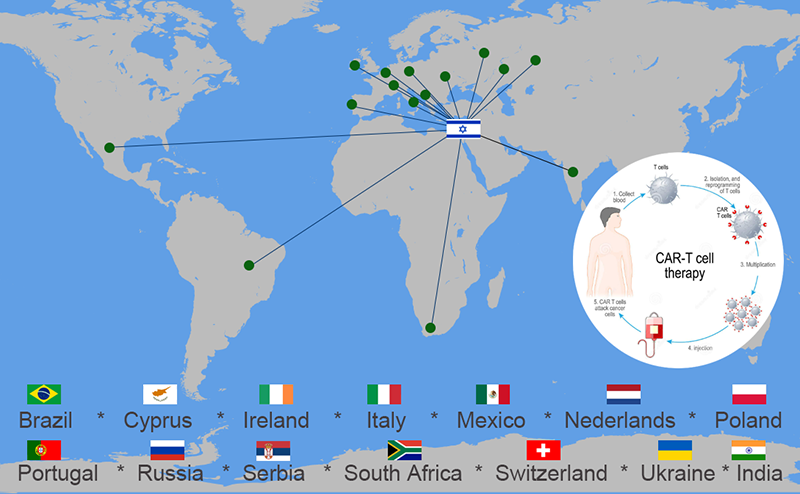
Some leading Israeli hospitals manufacture CAR-T cells within their own hospital programs. This is often described as hospital-manufactured, academic, home-made or point-of-care CAR-T.
Local production can reduce transportation requirements and may shorten parts of the manufacturing pathway. Published studies also suggest that decentralized production can lower manufacturing and logistical costs. However, the actual timeline and total treatment cost depend on the hospital protocol, the patient’s condition and any additional care required.
The full cost, not only the CAR-T product
The total cost of CAR-T treatment may include medical consultations and pre-treatment testing, T-cell collection and manufacturing, bridging treatment if required, lymphodepleting chemotherapy, hospitalization, treatment of complications, follow-up examinations, accommodation, daily expenses, and travel for the patient and caregiver. In the United States, the CAR-T treatment price can result in a very high final cost once hospitalization and related medical care are included. CAR-T costs vary considerably between countries, and a lower initial price quote does not necessarily mean a lower total treatment cost unless all included services are clearly stated.

Comparing major CAR-T destinations
United States
The United States has numerous experienced cellular-therapy centers and several FDA-approved commercial CAR-T products. It offers broad clinical expertise and extensive trial activity. For international self-paying patients, possible disadvantages include very high total costs, insurance limitations and differences between centers in waiting time and acceptance procedures.
Europe
CAR-T is available in several European countries, but access is not uniform. A 2026 review of the European CAR-T landscape found substantial differences in commercial availability and access between countries.
European residents may receive treatment through national healthcare systems when they meet local criteria. This does not necessarily mean that the same pathway is open to an international patient. Foreign patients need to confirm whether a particular program accepts self-paying cases and which regulatory route applies.
Israel
Leading Israeli hospitals have substantial experience in cellular therapy and operate hospital-manufactured CAR-T programs. The potential advantages for international patients include direct case review, point-of-care production within the treating hospital and costs that may be lower than imported commercial CAR-T pathways. The hospitals themselves determine eligibility, timing and the treatment protocol. Applications are reviewed individually. No diagnosis alone guarantees acceptance, and treatment availability can change.
Testimonial by a CAR-T patient at Hadassah hospital
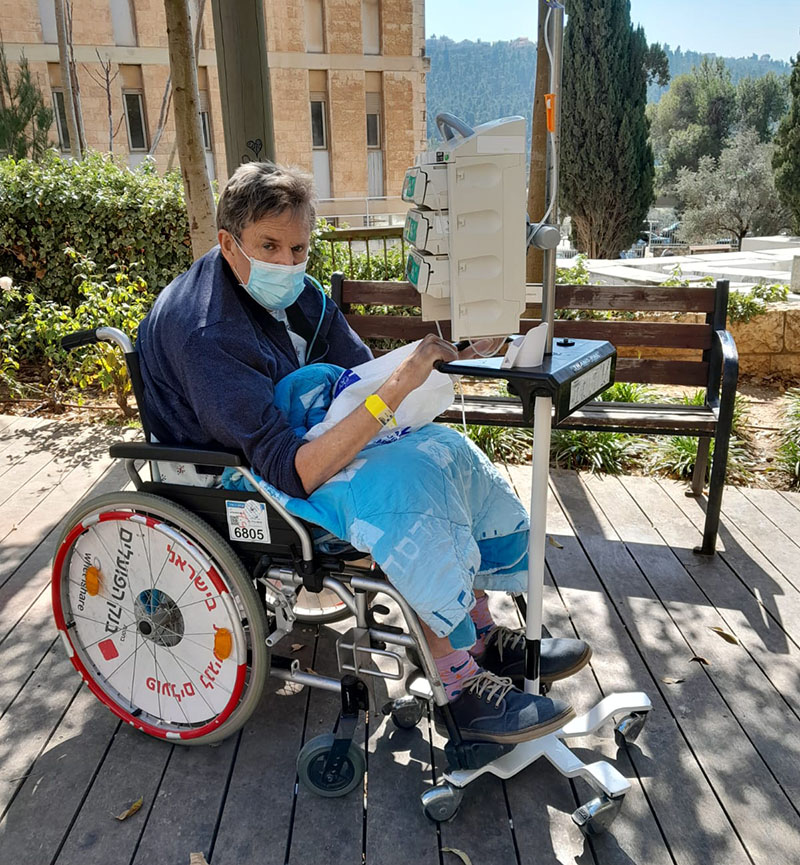
My Husband and I engaged with Tanya Preminger from IHA to travel from New Zealand to Israel for undertaking Car T treatment. During the preparation stage Tanya was very professional in her approach and extremely responsive to our many emails. During our 8 week stay in Israel Tanya was incredibly supportive on both a practical and social level. Tanya was an effective communicator with ourselves and the Hadassah hospital staff, always accountable and flexible with our needs. We would highly recommend Tanya as a representative for other clients who may be considering various treatments in Israel.
Yvonne and Mike Hogan, New Zealand, 8/5/2023
China
China has a large and rapidly developing CAR-T research and treatment landscape, including commercial products and numerous clinical studies. Regulations, treatment models, language support and international-patient procedures can vary between centers.
Patients considering China should clarify whether the proposed therapy is commercially authorized, hospital-produced or investigational and should request a detailed explanation of the protocol and follow-up arrangements.
Canada, Australia and Singapore
These countries have experienced medical centers and access to approved cellular therapies. International access may nevertheless be limited, and treatment costs, referral requirements and waiting times should be checked directly before making travel plans.

What do long-term CAR-T results show?
The strongest long-term evidence is currently in certain B-cell malignancies.
In June 2026, researchers reported ten-year outcomes from an early CAR-T study in B-cell lymphoma. Ten-year lymphoma-free survival was 32% among patients with large B-cell lymphoma and 47% among those with follicular lymphoma. The study was small, involving 38 patients, so these figures should not be treated as a prediction for an individual patient. However, the results provide important evidence that some CAR-T responses can remain durable for many years.
Results vary substantially according to diagnosis, disease burden, previous treatments, CAR-T product or protocol and the patient’s overall condition. CAR-T can also cause serious complications, including cytokine release syndrome, neurological toxicity, infections and prolonged low blood counts.
A specialist team must balance the possible benefit against these risks.
When should an international patient request a review?
A review may be appropriate when a patient has lymphoma, multiple myeloma or leukemia that has relapsed, stopped responding to treatment or is considered high risk.
It can be useful to request an evaluation before all other options have been exhausted. An earlier review gives the CAR-T team time to assess previous treatments, disease status and possible next steps. It does not oblige the patient to travel or proceed with treatment.
Request an individual CAR-T review in Israel
Israeli Hospitals coordinates the review of international CAR-T applications with leading Israeli hospitals.
To request an individual assessment, submit the patient’s medical records through our inquiry form. We will organize the information for review by the appropriate CAR-T team and explain the next steps if the hospital requires additional documents, testing or a medical consultation.
Every application is assessed individually. Submission of records does not guarantee eligibility, acceptance, treatment availability or a particular outcome.
Initiating your CAR-T medical inquiry >>
Sources
- Ruella M, et al. “Ten-Year Outcomes after CAR T-Cell Therapy for B-Cell Lymphoma.” New England Journal of Medicine, June 2026. Study abstract
- Pennings ERA, et al. “The European CAR-T Map: Current Status and Future Directions.” 2026. Full scientific review
- Palani HK, et al. “Safety, efficacy and total cost of point-of-care manufactured CAR T-cell therapy.” 2025. PubMed record

Links
CAR-T patient testimonials >>
What are the key factors to consider when choosing a car-t therapy provider for international patients?
CAR-T cell therapy in Israel
CAR-T for Leukemia and Lymphoma in Israel
CAR-T for Myeloma in Israel
CAR-T cell therapy for leukemia and non-Hodgkin's lymphoma (NHL) in Europe
CAR-T cell therapy for Multiple Myeloma patients in Europe
CAR-T therapy for international patients
CAR-T therapy in China
CAR-T therapy in Spain
CAR-T cell therapy in Germany
CAR-T cell therapy in Japan